Financial inclusion drives economic progress and poverty alleviation in today’s interconnected and rapidly evolving world. It makes sure that individuals and entrepreneurs, regardless of their social or economic standing, can access essential financial services like banking, credit and insurance. This often means vulnerable people can manage risks, invest in education and healthcare, and secure their financial future.
Financial inclusion contributes to at least seven of the 17 United Nations’ Sustainable Development Goals (SDGs), including those addressing poverty, hunger, health and gender equality. Access to finance empowers underserved people to actively participate in the economy and helps individuals and micro and small entrepreneurs transition from informal economies to become more financially secure, promoting long-term growth.
Worldwide, 1.3 billion adults are still unbanked (World Bank, 2025). This means they are trapped in cash-based systems, unfair financing or predatory lending, unable to effectively save, invest or grow their wealth. Closing this gap is not just about enhancing personal financial stability; it’s about fostering equitable and sustainable economic development on a global scale.
The global dimensions of financial inclusion
In the Global North, financial inclusion often revolves around integrating marginalised communities into the formal financial system, addressing the exclusion faced by minorities and low-income individuals. In the Global South, however, it takes o a more transformative role, particularly for those at the base of the economic pyramid and for micro, small and medium-sized companies (MSMEs). Initiatives like microloans for individuals and small businesses don’t just improve people’s quality of life, they also stimulate local economies, foster job creation and promote inclusive economic growth.
Migration provides a useful example. Like two sides of the same coin, migration trends have driven the need for financial innovation to meet the diverse needs of migrants and their families. Immigrants in the Global North require access to credit cards, loans and mortgages. At the same time, their families in the Global South look for efficient ways to manage remittances. These dual needs underscore the importance of developing tailored financial solutions that help people build prosperity.
 Immigrants to the US provide an example of how these competing needs play out in practice, and how they can be addressed. Without a US Social Security number or credit history, many individuals face challenges to access loans and credit cards, which hinders their ability to build credit. According to BankRate, nearly half of immigrants find it hard to obtain a US credit card. In 2017, Beneficial State Bank created a solution by accepting Individual Taxpayer Identification Numbers (ITINs) for customers without Social Security numbers. This initiative has since expanded due to its success, offering immigrants access to essential financial services like car loans, helping them avoid predatory lending.
Homeownership is one of the most effective ways to create generational wealth and avoid exclusion. But many immigrant communities often struggle to secure a mortgage to buy a home, without a credit history. In response, Sunrise Banks has developed a mortgage programme that allows immigrants without a Social Security Number (SSN) to arrange a home mortgage, and works with borrowers to guide them through the process.
In Latin America, there has been an increase in clients who depend on remittances. Banco de Antigua in Guatemala has created Crédito Remesas (Remittances Loan) a loan that provides options for individuals to use their remittances in a way that creates higher returns.
Reaching out where the needs are
Banco de Antigua exemplifies values-based banks’ proactive approach to reaching their clients, particularly in microfinance institutions, with the aim to break generational cycles of poverty. As do other GABV banks in the region, Banco de Antigua takes a hands-on approach. It directly engages with underserved communities in the field to better understand their needs. These banks maintain an extensive network of agents who travel to remote rural areas, offering personalised financial solutions that help improve the quality of life for people with unique needs. This on-the-ground outreach is complemented by the use of social networks and digital media.
 In Serbia, 3Bank’s employees drive from village to village helping enterprising people start a business. The bank focuses on microfinance and provides Micro, Rural, Agro and SME loans and other financial services. By lending to small-scale businesses and individuals, 3Bank reduces unemployment and enables people to progress both as individuals and as entire communities.
Many banks partner with NGOs and other organisations who are close to the real needs of local communities and can make the connection between the bank and the beneficiary. In other cases, the bank finances charities and social businesses that provide these services directly.
Since the 1990s, Vancity, in Canada, has opened bank accounts for thousands of refugees transitioning through the Immigrant Services Society of BC (ISSofBC) and other agencies that focus on resettlement work. In 2023 alone, Vancity opened over 2,400 new accounts for refugees and displaced people.
vdk bank collaborates closely with local organisations and NGOs which help them better understand and address refugees’ specific needs. Today, vdk bank is the only Belgian bank that allows refugees to open accounts without a residence permit. Instead, individuals can use their foreign passport along with the associated registration number to open an account. Once their application for an identity card is approved, the bank updates their records.
Long-term relationships of trust
The experience of GABV banks shows there are three key ingredients to successful financial inclusion:
- Build long-term relationships and trust between financial institutions and their clients. By understanding customers’ needs, banks can tailor products and services that facilitate their financial wellness.
- Provide financial education and entrepreneurial counselling. Particularly in microfinance banks, working with and counselling clients has profound, long-term benefits.
- Guarantee accessibility to banking services, including digital services and making sure you are present in remote areas.
This approach focuses first on the client and their needs, and only then on offering products or services. When trust and strong relationships are established, a customer who initially takes out a small loan may later feel confident to ask for more products and services, deepening their engagement with the institution.
Kompanion Bank promotes financial inclusion by offering a range of accessible services, including payment cards, loans, deposits and digital products like the Kompanion mobile app. The bank caters to diverse customer needs, providing both traditional and digital banking services for all age groups. The app allows users to access over 500 banking services remotely, including ordering a Visa card with free courier delivery. To simplify payments, the bank has implemented QR code payments across retail outlets, enabling customers to make purchases or transfers with ease. The bank operates through a large, 2000-strong agent network in Kyrgyzstan, including in remote parts of the country. It offers services like cash withdrawals, loan repayments, and QR code payments in everyday locations such as stores and gas stations.

Kompanion Bank’s Community Support Department plays a crucial role in promoting financial and digital literacy, while also offering specialised training in agribusiness. Given that agriculture is vital to Kyrgyzstan’s economy, with 26% of the workforce engaged in this sector, Kompanion Bank supports farmers by providing agribusiness loans, training and connections with local suppliers. From 2016 to 2021, the bank implemented projects to improve nutrition and agricultural skills. It planted over 4,000 fruit trees in remote regions and initiated a “Fruit Gardens” project, planting 3,000 fruit saplings at 28 educational institutions.
Bridging financial gaps: The origins of Values-Based Banking
Values-based banks often emerge to fill existing financial gaps in underserved communities, providing financial inclusion where traditional institutions have fallen short. Many were founded to address the financial exclusion experienced by specific groups, such as Amalgamated Bank in the USA and vdk bank in Belgium, which were established by workers in the clothing industry who lacked access to financial services. Similarly, TISA Bank, in Papua New Guinea, was founded by educators to be actively involved in savings and to assist each other in times of financial need.
In Peru, Cooperativa Abaco was created in 1981 by 32 individuals of Japanese descent that utilized the traditional Tanomoshi-ko concept of financial mutual aid to promote inclusion. This model was also adopted by Dai Ichi Kangyo Credit Cooperative in Japan, which supports local businesses, women, youth, and seniors with low-interest loans and business development services, contributing to sustainable community growth.
Some values-based banks were specifically funded to support existing NGOs or cooperatives. Members like National Cooperative Bank in the USA or Laboral Kutxa in Spain are rooted in the cooperative movement and were funded to give financial support to cooperatives.
Banco Mundo Mujer, in Colombia, and BRAC Bank, in Bangladesh, were initiated by development NGOs in order to extend financial services to individuals and small businesses previously excluded from the formal banking sector, providing a pathway out of poverty. In 2003, the Aga Khan Development Network (AKDN) established the First Microfinance Bank Tajikistan, now renamed as Investment and Credit Bank (ICB), to operate in one of the poorest countries of the former Soviet republics.
Empowerment through entrepreneurship and education
Financial education and counselling are essential components of financial inclusion. These services provide crucial support for micro-entrepreneurs and offer educational courses and events tailored to low-income savers. By empowering individuals with knowledge and resources, financial institutions can help them make informed decisions and build a more secure financial future.
Banco Mundo Mujer (BMM) is making waves in Colombia through its focus on financial education, particularly for women and rural communities. A key element of the bank’s strategy is to offer financial literacy programmes that empower clients to manage their resources more effectively, start small businesses and improve their overall economic well-being.
In 2022 alone, BMM trained over 400,000 clients in financial literacy.
This training is designed to help clients better understand how to use credit, manage savings and make informed financial decisions. These efforts align with broader development goals, such as reducing poverty and promoting gender equality, by giving marginalised populations the tools to lift themselves out of economic hardship.
Banco Codesarrollo is committed to transforming the economic and social well-being of the popular and solidarity economy sectors in Ecuador. Guided by its vision of “integral development,” the bank offers tailored financial products for women, youth, migrants, and environmental initiatives, promoting financial inclusion and sustainability.
Through strategic partnerships with social integration networks, producer associations, and local financial entities, Banco Codesarrollo facilitates loans that empower rural producers and artisans, helping their communities thrive. Additionally, the bank offers a website dedicated to financial education with videos, resources, and practical tips for managing personal and business finances, including advice on financial security and debt management. More than 3,000 people, including young individuals and students, benefited from their financial literacy programme in 2023.
Summit Credit Union (USA) has implemented various initiatives to enhance the financial wellness of its members and the broader community by offering free resources for businesses, borrowers, and savers, including the engaging Money Smarts podcast series.
Among these initiatives is Project Money, a programme designed to empower individuals, families and communities with practical financial advice they can readily apply. Throughout a seven-month journey, four teams collaborate closely with a Summit coach who provides personalised strategies and resources to facilitate meaningful change. In the past 15 editions, participants have collectively reduced their debts by USD 650,000 and saved USD 610,000.
Innovative ways to access banking
Values-based banks always look for ways to connect with the communities they serve so financial services are accessible to all. This can mean expanding services to remote, underserved or low-income areas with new branches, as Canadian Kindred Credit Union does; or using vans where customers can conduct basic transactions and get training and information, like Civic Credit Union’s (USA).
Technology plays a key role in financial inclusion, especially in remote areas, by making banking services more accessible.
However, for older or less educated individuals, digital tools can be challenging to use. To address this, many banks offer a mix of traditional and digital banking, along with financial literacy programmes. Values-based banks combine these approaches, ensuring that all customers can access and benefit from financial services.
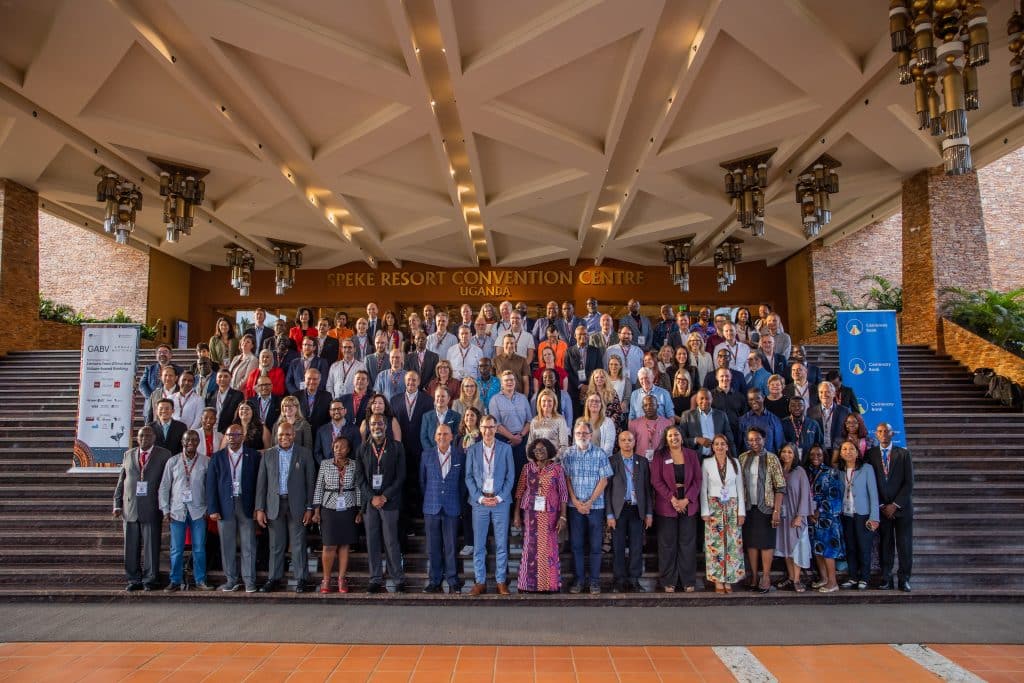
Centenary Bank, a leading commercial microfinance institution in Uganda serving more than 2.5 million customers, has been a pioneer in agent banking since 2017. This third-party banking system is provided by trained agents who are selected and appraised by Centenary Bank and approved by the Central Bank of Uganda. With a large network of 8,500 agents, especially retail shops and service companies, Centenary Bank ensures that its services are accessible to a wide range of customers. The bank is also a pioneer in offering basic banking services via WhatsApp.
BancoSol (Bolivia) developed MundoSol, an application to process and disburse credit to support microenterpreneurs throughout the country. It uses AI tools to obtain, analyse and process information from the bank’s customers. In this way, it significantly reduces the processing time of a credit application of up to USD 6,000, to the benefit of the customer.

Verity Credit Union (USA) creates tailored lending solutions to serve and support those who have been historically excluded from traditional financial services. And it is keen to innovate where it can. Traditional credit scoring models leave many qualified borrowers out for different reasons, including unconscious biases and systemic flaws. To address this, Verity partnered with Zest AI, whose AI-powered underwriting system makes sure more equitable and efficient credit decisions are made.
By using AI-driven insights, Verity has improved loan performance tracking and significantly increased automated approvals for auto loans, personal loans and credit cards. This allows them to provide faster decisions and expand access to credit for marginalised groups.
Whether through AI, mobile banking vans, WhatsApp banking, agent networks, or traditional branches in remote areas, values-based banks innovate solutions to ensure everyone has access to financial services.