Across continents, banks and credit unions are recognising that access to financial services alone isn’t enough. People need the knowledge and confidence to use those services well. This is central to the purpose of the Global Alliance for Banking on Values (GABV): to expand values-based banking and drive a financial system that promotes social equity, tackles the climate emergency, and delivers lasting prosperity for all.
Financial literacy is part of how that gets delivered on the ground. So, what does it look like in practice? Here are five examples from GABV member banks around the world, one from each region: Europe, North America, Latin America and the Caribbean (LAC), Asia-Pacific (APAC), and Africa
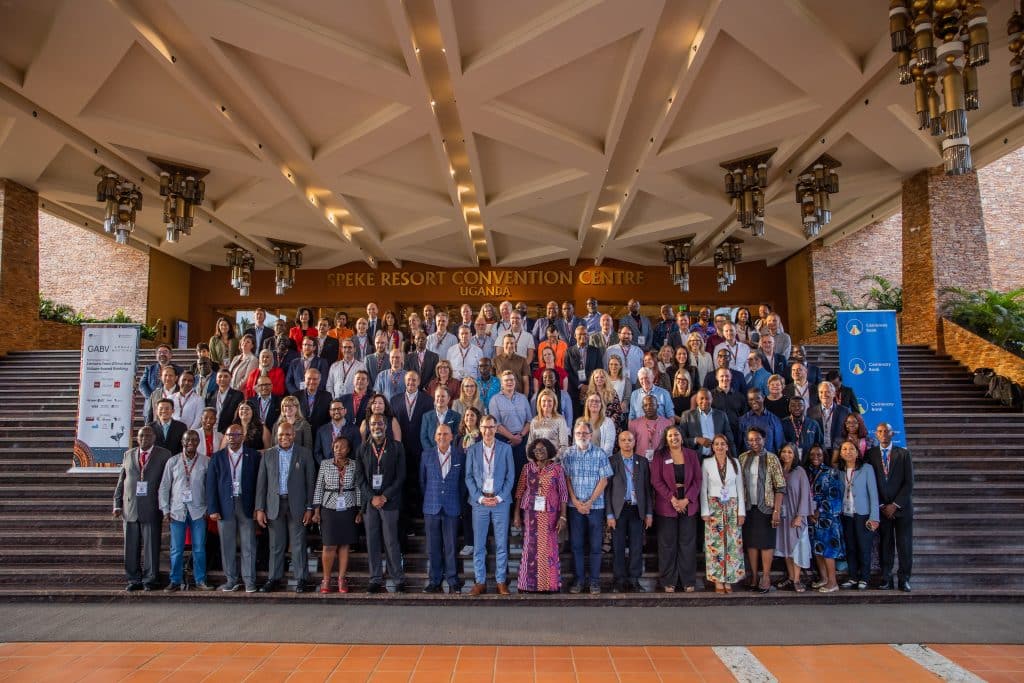
Centenary Bank: ‘She Counts’ closing Uganda’s gender finance gap
In Kampala, Centenary Bank and the United Nations Development Programme have launched the She Counts Fair, a programme aimed at shifting how women engage with their finances. According to the Bank of Uganda’s Financial Capability Survey, financial literacy among women stands at 45%, compared to 53% among men, a gap that has real consequences as women-owned businesses make up roughly 40% of all micro and small enterprises in the country.
“For too long, the financial dialogue surrounding women has been relegated to the sidelines of micro-survival and basic savings,” said Centenary Bank Managing Director Fabian Kasi at the programme’s launch. Through structured learning sessions, expert-led investment clinics, and peer learning forums, She Counts is introducing women to savings products, pensions, insurance, and capital markets, tools that have historically felt out of reach.
UNDP resident representative Nwanne Vwede-Obahor put it simply:
“We want to demystify investments by speaking in plain, useful and actionable language because many women are excluded from formal financial systems not for lack of ability but because those systems were never made accessible to them.”
The work builds on Centenary Bank’s existing GROW Project, which has already empowered over 52,000 women through financial literacy training and disbursed USD 9.8 billion (UGX 36.1 billion) in loans to women-led enterprises.
Clearwater Credit Union: Free financial counselling, one conversation at a time
Financial literacy doesn’t always require a new branch or a national programme. At Clearwater Credit Union, it takes the form of a Financial Guidance Center, offering members no-cost access to an in-house team of Certified Financial Counselors. Members can sit down with a financial guide to understand their spending habits, work through debt, and build a realistic, manageable budget.
The approach is built on respect and trust. As Clearwater describes it, meeting with a financial guide can be a transformative step along someone’s financial path, and with the right support, the credit union believes anyone can create a clear way forward. From personalised budget support to debt relief guidance, the goal is to chart actionable steps that help members build savings and keep progressing, one conversation at a time.
BRAC Bank: Community sessions boost formal remittance channels
In four districts across Bangladesh, BRAC Bank has been running a series of community sessions called Uthan Boithak, designed to encourage expatriate families to use formal banking channels for remittances rather than informal methods like hundi.
The sessions, held at agent banking outlets in Chuadanga, Jashore, Magura and Lakshmipur, brought together expatriate families and local residents for interactive discussions on the safety and reliability of formal channels. Bank officials introduced participants to tailored Probashi Poribar accounts, designed specifically for expatriates and their families, and encouraged families to direct remittance income toward education, small businesses and long-term savings.
The response was striking. Nearly 70% of participants had never previously held an account with BRAC Bank, showing just how much untapped potential exists when financial education reaches the right communities.
Banco Integral: Financial education as a tool for entrepreneurial growth
At Banco Integral, financial education has taken shape as Surge, a platform combining business training with financial literacy programmes for micro and small business owners. The idea is simple but powerful: when an entrepreneur gets stronger, their business grows, and when businesses thrive, well-being is generated for everyone around them.
To date, Banco Integral has accompanied more than 7,000 entrepreneurs through the platform, accumulating 142,000 hours of training across more than 63 course options and six dedicated business and financial education programmes. “At Banco Integral we believe in a purpose-driven banking that transcends transactions and becomes an ally in the lives of our customers,” the institution explains. The platform reflects a broader philosophy that banking should go beyond financial products to offer knowledge tools that help people grow in a comprehensive way.
Cooperative Bank of Karditsa: Building digital financial literacy for the next generation
In Karditsa, the Cooperative Bank of Karditsa has joined an Erasmus+ funded project called DiFiLiR, short for Digital Financial Literacy for Inclusion and Resilience. Coordinated by MALTAccelerate in Malta and implemented alongside the Helix Social Innovation Hub in Greece, the project recognises that digital skills alone aren’t enough without the ability to manage money confidently in an increasingly digital economy.
DiFiLiR is focused on developing practical digital financial literacy skills for young people not in employment, education or training, as well as young entrepreneurs and small and medium-sized enterprises. At this early stage, the project is gathering input directly from the communities it aims to serve, ensuring the educational material that’s developed reflects real, lived needs rather than assumptions made from the outside.
Different contexts, one shared goal
What connects these stories, from Kampala to rural Bangladesh to El Salvador to Greece, is a recognition that financial literacy isn’t a side project. As these banks continue to invest in education alongside access, in person, online, and everywhere in between, they’re proving that real financial inclusion means more than opening an account. It means equipping people with confidence and knowledge to shape their own futures.