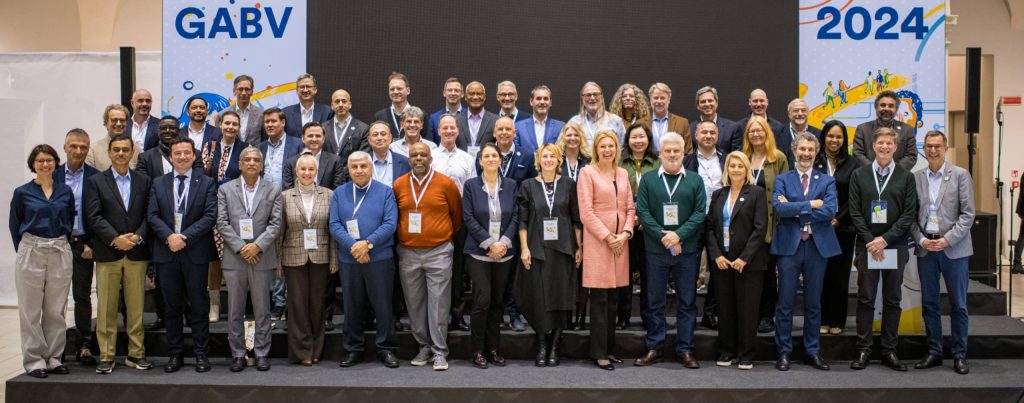
The 2026 Global Alliance for Banking on Values Annual Meeting spotlights the future of inclusive and equitable finance
GABV
25 March 2026
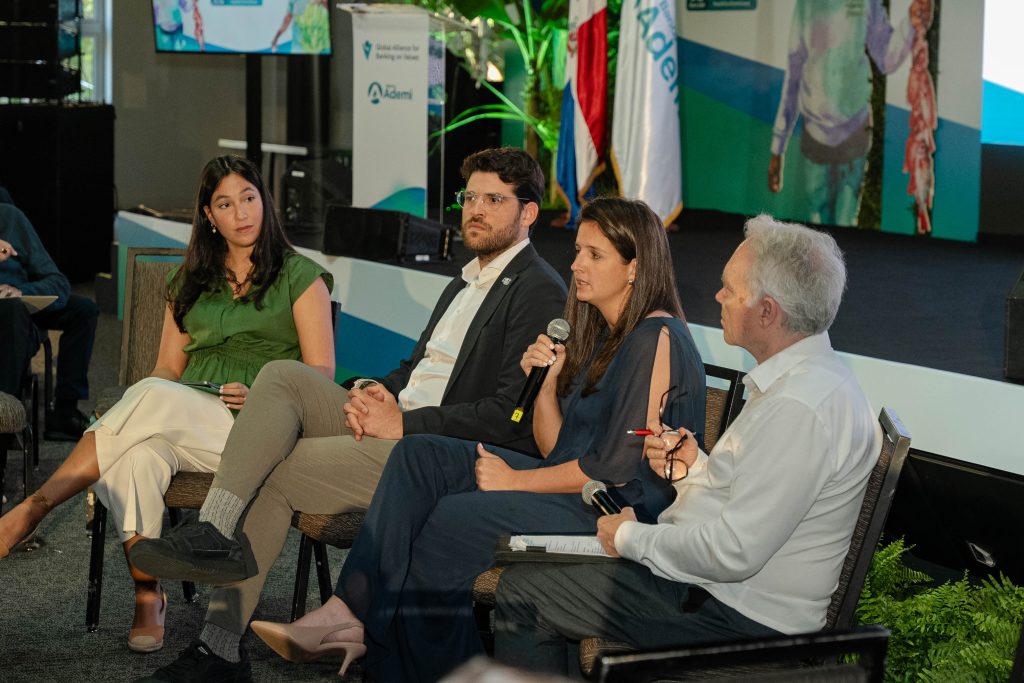
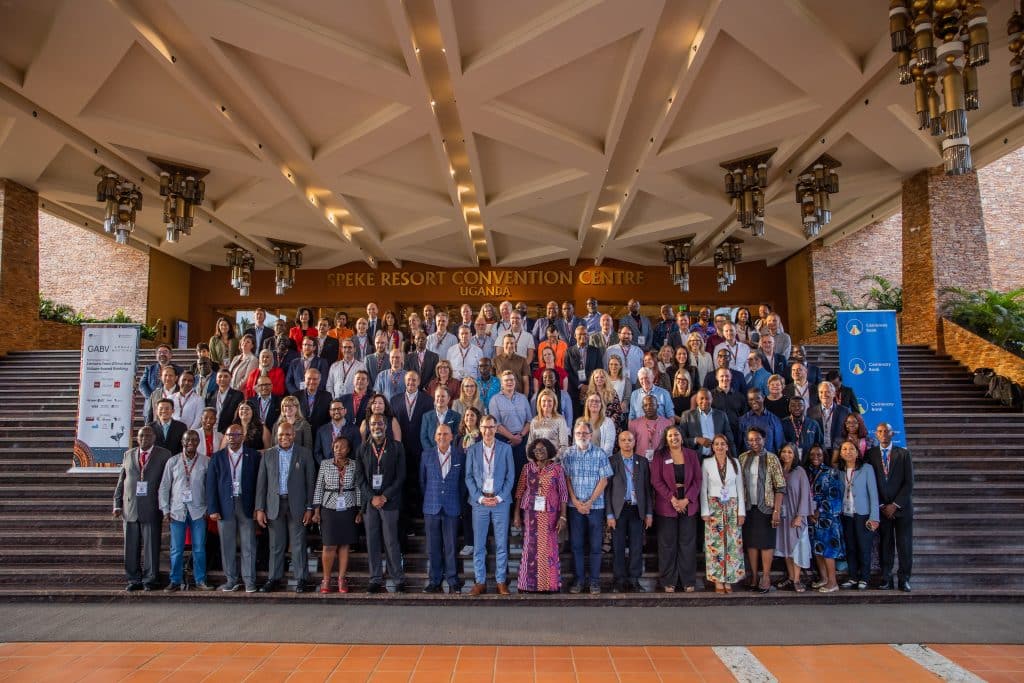
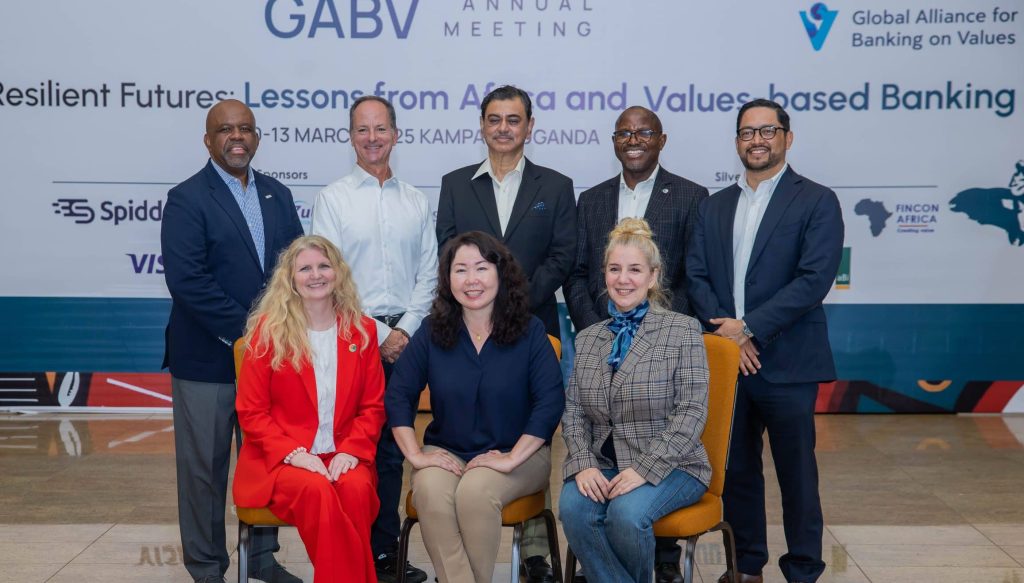
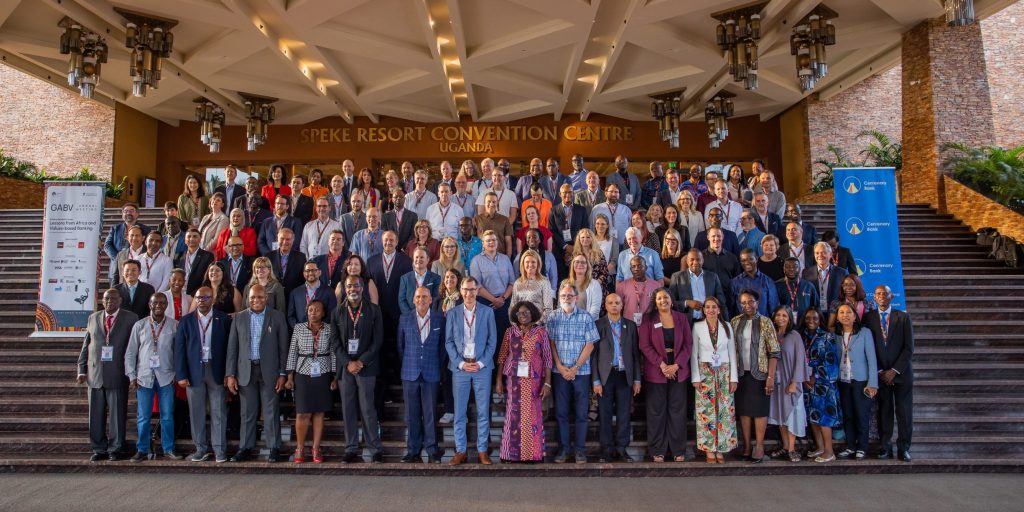
Inclusive finance pioneer, Banco Ademi, welcomed the 18th Annual Meeting of the Global Alliance for Banking on Values (GABV) to Santo Domingo, Dominican Republic, from 9-12 March 2026. Over three days, CEOs and leaders from values-based banks across 40 countries came together to exchange perspectives, challenge assumptions and reflect on how finance can actively advance inclusion and equity.
By Horla Natsagdorj, Communications Officer at the Global Alliance for Banking on Values
The GABV Annual Meeting has become the event to help propel the values-based banking movement forward. This year was no exception. More than 160 leaders from values‑based banks, policymakers, and global experts convened in Santo Domingo on the theme “Finance as a Force for Inclusion and Equity.”
Participants explored some of the most pressing issues shaping the future of banking, including migration, the human dimension of data, the opportunities and challenges of artificial intelligence for sustainable banks, and how values‑based banks can support the next generation of leaders working on climate, community and nature.
Andrés Bordas, CEO of Banco Ademi, highlighted the significance of hosting the meeting in the Dominican Republic:
“This meeting is not only about a work agenda; it is the reaffirmation of a shared commitment: to put finance at the service of people and the environment and to be a global example of these good practices.”
David Reiling, GABV Board Chair, spotlighted the power of collaboration:
“In this event you can expect the unexpected…connections and opportunities to strengthen our organisations and demonstrate that as a bank you can serve both people, planet, and remain prosperous.”
Opening Session: There Is No Peace Without Functional Systems
The Annual Meeting opened with remarks from Banco Ademi’s Board Chair, Juan Manuel Ureña, who said that “finance as a force for inclusion and equity is so relevant today in a world marked by profound technological, economic and social transformation.” He signalled that financial institutions can “expand opportunities, strengthen communities’ resilience, and contribute towards a more inclusive economic development”—a principle at the heart of Banco Ademi for nearly 43 years.
The meeting was honoured by the presence of the Vice President of the Dominican Republic,Hon. Raquel Peña Rodríguez. The Vice President highlighted the vital role of finance in driving economic growth, expanding opportunities and reducing social gaps. She remarked that financial inclusion is a key tool in achieving this, noting that: “the future of finance will be measured in opportunities created within communities—and, most importantly, in lives transformed.”
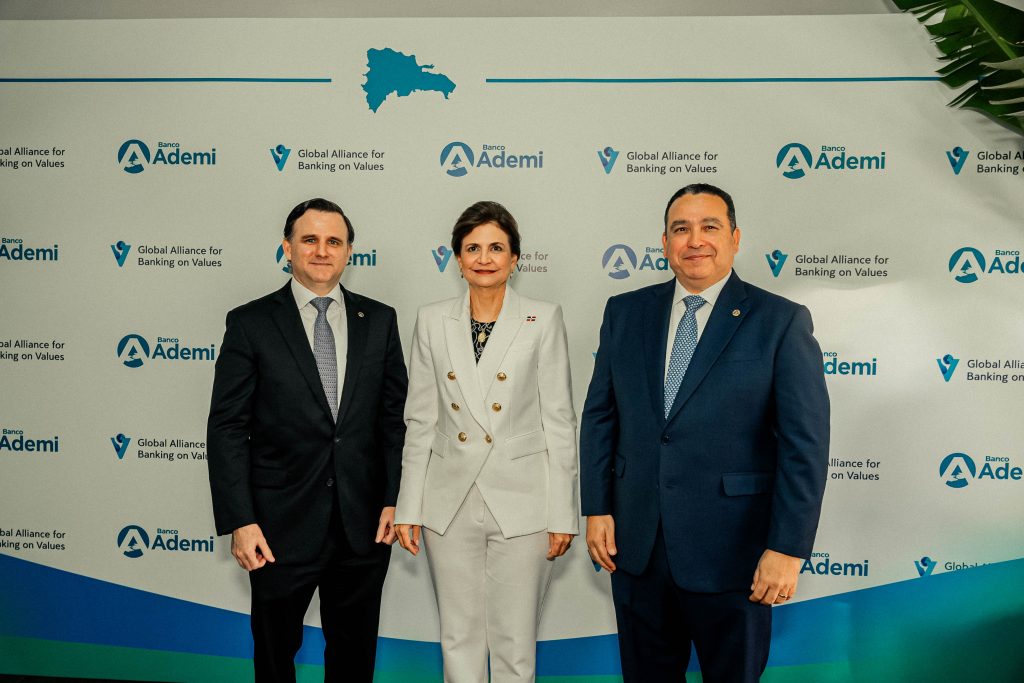
Andrés Bordas (CEO, Banco Ademi), Raquel Peña Rodríguez (Vice President, Dominican Republic) and Juan Manuel Ureña (Board Chair, Banco Ademi) in the opening session.
Keynote speaker, Dr. Mauricio Meschoulam, Professor and Founder of the Mexico Research Center for Peace, drew a clear link between finance and stability. He argued that “there is no peace without functional systems,” urging participants to understand peace not merely as the absence of conflict, but as the presence of strong institutions that create and sustain it.
“Peace depends on systems that distribute risks, opportunities and dignity fairly, and one of those systems is the financial system,” – Mauricio Mescholuam, Founder Mexico Research Center for Peace
Global Outlook, Local Realities
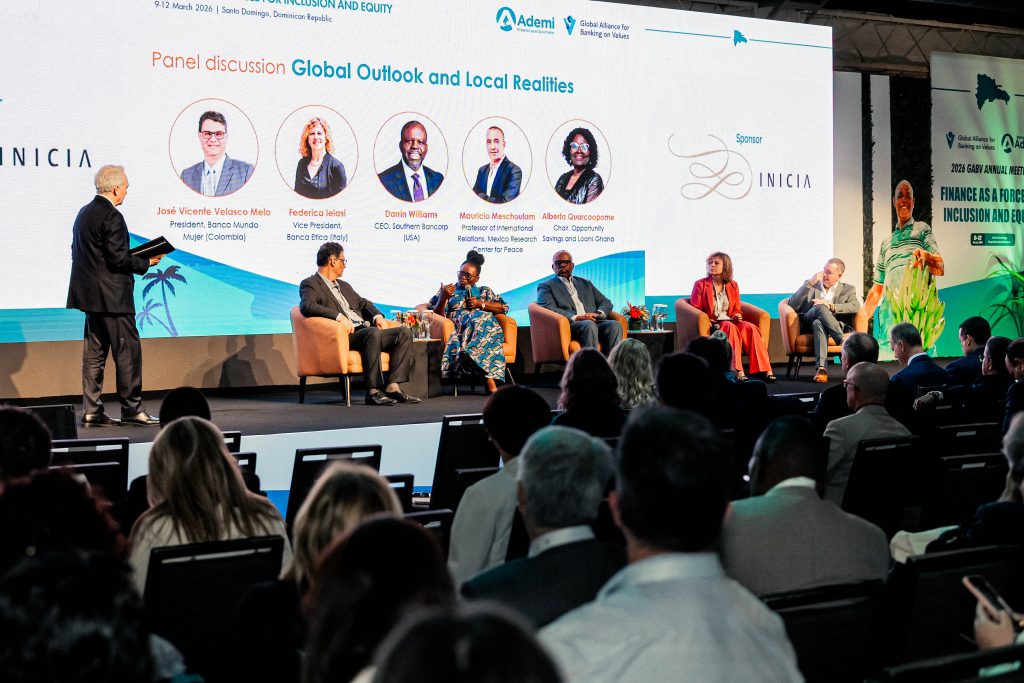
Following the keynote, Meschoulam joined a panel discussion on global outlooks and local realities, alongside leaders from values‑based banks in Colombia, Ghana, Italy and the United States. The panel shared perspectives rooted in their national contexts, highlighting what financial inclusion and equity mean for their institutions operating in different contexts.
From left to right: José Vicente Velasco Melo, Alberta Quarcoopome, Darrin Williams, Federica Ielasi, and Dr. Mauricio Meschoulam.
José Vicente Velasco Melo, President, Banco Mundo Mujer (Colombia): “Financial inclusion, and education are part of what Latin America needs to reduce the gap between the people with higher and lower incomes.”
Alberta Quarcoopome, Chair, Opportunity Savings and Loans Ghana: “In Africa, geopolitics has always affected us, so we have learned to live with it. The most important thing to do is to stay focused. We focus on transforming society through microlending to youth and people in rural areas. So that as they transform themselves, they transform their communities.”
Darrin Williams, CEO, Southern Bancorp (USA): “In the USA, there are banks everywhere, but presence does not necessarily mean access.”
Federica Ielasi, Vice President, Banca Etica (Italy): “Banking is never neutral. Every euro we lend is a vote for the type of work we want to build. At Banca Etica, we work to prove that interest in the common good and peace are the most sustainable investments. We know that spreading our values requires collective impact and shared global vision.”
From Inclusion to Impact: Lessons from LAC and the world
Luis Felipe Derteano, a founding Board member of the GABV, opened the session on “Strategies for Financial Inclusion” by stressing that “inclusion is not enough, the banking system must also protect the environment.” Reflecting on decades of experience across Latin America and the Caribbean (LAC), he highlighted the need to equip entrepreneurs with the right tools, close the gender gap, and build systems that enable sustainable livelihoods, pointing to the shift from microcredit to broader financial ecosystems.
Building on this, Mercedes Bidart, Co-Founder and CEO of Quipu, showed how AI is reshaping inclusion by unlocking alternative data in Latin America’s largely informal economies. “The new currency of finance is not capital—it is data,” she noted, inviting her audience to rethink how financial systems understand and serve disadvantaged communities. As digital payments grow, she emphasised that true inclusion requires rethinking how data is used, addressing bias, and fostering partnerships between fintechs and banks to better benefit underserved communities.
“The new currency of finance is not capital—it is data.” – Mercedes Bidart, Co-Founder and CEO of Quipu
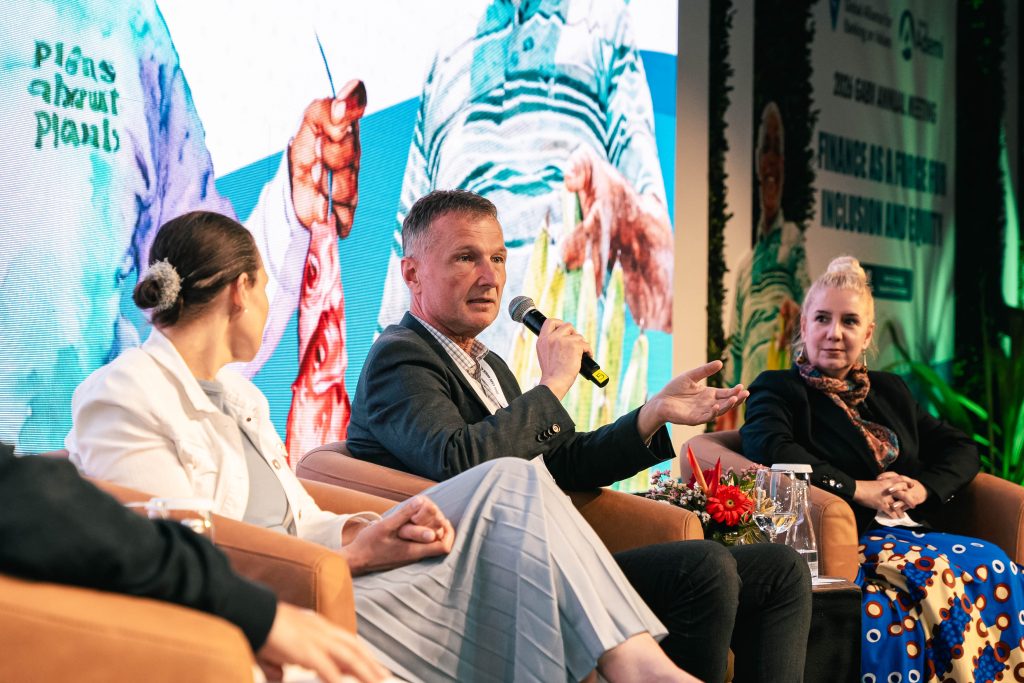
Following Mercedes’ keynote, a panel discussion brought together CEOs from GABV members and partners—Oikocredit International (Netherlands), FINCA DRC (Democratic Republic of Congo), 3Bank (Serbia), and Banco Ademi (Dominican Republic). They shared their vision and strategies to promote financial inclusion and equity in their regions.
Panel discussion on Strategies for Financial Inclusion.
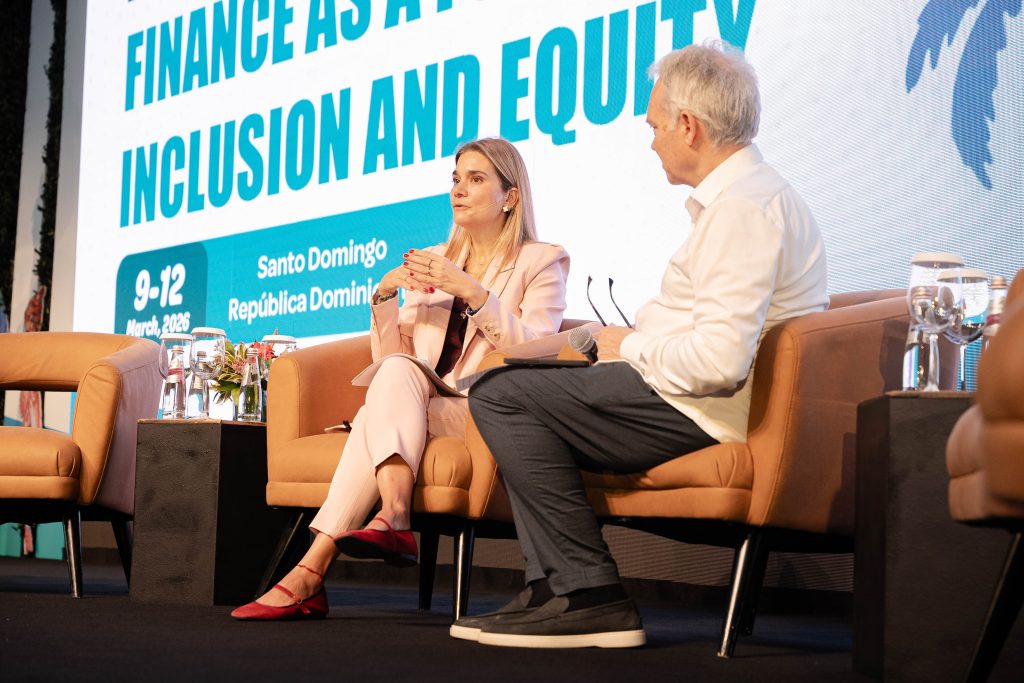
Celina de Sola, Co-Founder and President of Glasswing International.
Finally, Celina de Sola, Co-Founder and President of Glasswing International, highlighted the importance of investing in youth and unlocking untapped potential across Latin America and the Caribbean. Working with communities affected by poverty and migration, she stressed the need to understand people’s priorities and meet them where they are.
“What can you do for others in your sphere of influence?” she asked, pointing to the power of mentorship and consistent support. She also emphasised the value of partnerships built on shared purpose, noting that real impact starts with asking the right questions and aligning on the “why.”
The sessions illustrated that advancing financial inclusion requires more than access. It demands systems that are adaptive, human-centred, and grounded in equity, collaboration, and long-term impact.
Technology & Migration
On the second day of the meeting, Surjit Chana, Board Member of Beneficial State Bank (USA), sharedinsights on the future of AI in banking and the importance of embedding values into its development. He outlined a shift toward AI-supported organisations, where humans work alongside AI assistants and agent teams, with up to a third of banking functions potentially automated.
In addition, Surjit Chana underscored the need to thoughtfully design AI with clear governance and responsibility from the start. As AI investment in finance grows, participants explored a central question: if AI is shaping finance, who will teach it values? These discussions will help develop guidelines for the responsible and effective use of AI in values‑based banks
Lala Lovera, Co-founder & Executive Director of Fundación Comparte Colombia.
This forward-looking discussion was built on by a panel featuring leaders from Compartamos Banco/Gentera (Mexico), Bank Australia, and Climate First Bank (USA). Panellists shared their growth journeys and experiences navigating technological change and institutional evolution.
Shifting focus from technology to people, the final day explored “Inclusion of Migrants in Latin America and the Caribbean: Trends and Opportunities.” René Maldonado, a migrations and remittances expert with the Inter-American Development Bank, highlighted their critical role in regional economies.
Lala Lovera, Co-founder & Executive Director of Fundación Comparte, brought a human lens to the analysis and data. Lala reminded the participants that “every number is alive.” She pointed to the need for financial systems that recognise migrants as active economic contributors and respond to their realities.
“Migrant families save. They invest. They adapt. But they’re often excluded.” – Lala Lovera, Co-founder & Executive Director of Fundación Comparte
The conversation continued with a panel of leaders from Sunrise Banks (USA), Opportunity International (USA), and Banco de Antigua (Guatemala). They shared practical experiences and stressed the importance of building trust while remaining accessible to underserved communities.
The Next-Generation Leadership
Session with Dominican young leaders.
The meeting concluded with an inspiring session featuring young leaders from the Dominican Republic. Alicia Butler (LEAD Lab), María Laura Martínez (Maguá Ecological Foundation), and Andrés Bisonó León (SOS Carbon) reinforced the importance of listening to communities.
>As part of the conversation, the young leaders highlighted the critical role that values-based banks play in enabling meaningful, locally driven impact.
Carbon Neutral Event
The GABV recognises the environmental impact of global gatherings and seeks to reduce it. Emissions were minimised through responsible procurement and offsetting unavoidable emissions. Banco Ademi partnered with sustainability experts Sostenibilidad3Rs to measure and offset emissions through certified projects, in line with international carbon footprint standards.
We use cookies on our website to give you the most relevant experience by remembering your preferences and repeat visits. By clicking “Accept All”, you consent to the use of ALL the cookies. However, you may visit "Cookie Settings" to provide a controlled consent.
This website uses cookies to improve your experience while you navigate through the website. Out of these, the cookies that are categorized as necessary are stored on your browser as they are essential for the working of basic functionalities of the website. We also use third-party cookies that help us analyze and understand how you use this website. These cookies will be stored in your browser only with your consent. You also have the option to opt-out of these cookies. But opting out of some of these cookies may affect your browsing experience.
Necessary cookies are absolutely essential for the website to function properly. These cookies ensure basic functionalities and security features of the website, anonymously.
Cookie
Duration
Description
cookielawinfo-checkbox-analytics
11 months
This cookie is set by GDPR Cookie Consent plugin. The cookie is used to store the user consent for the cookies in the category "Analytics".
cookielawinfo-checkbox-functional
11 months
The cookie is set by GDPR cookie consent to record the user consent for the cookies in the category "Functional".
cookielawinfo-checkbox-necessary
11 months
This cookie is set by GDPR Cookie Consent plugin. The cookies is used to store the user consent for the cookies in the category "Necessary".
cookielawinfo-checkbox-others
11 months
This cookie is set by GDPR Cookie Consent plugin. The cookie is used to store the user consent for the cookies in the category "Other.
cookielawinfo-checkbox-performance
11 months
This cookie is set by GDPR Cookie Consent plugin. The cookie is used to store the user consent for the cookies in the category "Performance".
viewed_cookie_policy
11 months
The cookie is set by the GDPR Cookie Consent plugin and is used to store whether or not user has consented to the use of cookies. It does not store any personal data.
Functional cookies help to perform certain functionalities like sharing the content of the website on social media platforms, collect feedbacks, and other third-party features.
Performance cookies are used to understand and analyze the key performance indexes of the website which helps in delivering a better user experience for the visitors.
Analytical cookies are used to understand how visitors interact with the website. These cookies help provide information on metrics the number of visitors, bounce rate, traffic source, etc.
Advertisement cookies are used to provide visitors with relevant ads and marketing campaigns. These cookies track visitors across websites and collect information to provide customized ads.