Biodiversity and nature conservation are essential pillars to sustain the delicate balance of life on Earth. In today’s world, where ecosystems face mounting pressures from urbanization, climate change and industrial activities, the need to protect and preserve the diversity of life is urgent and increasing.
Biodiversity supports the natural environment by maintaining ecosystem services like clean air, water and fertile soils. Importantly, it also underpins economic stability and human well-being. As we confront global challenges such as food security, health crises and climate change, conserving biodiversity is a vital strategy to ensure a resilient and sustainable future for us all.
What role play banks in biodiversity conservation?
The loss of biodiversity endangers the delicate balance of our ecosystems and poses significant risks to the global economy, as many industries depend on the natural resources and ecosystem services that biodiversity supports. Banks and other financial institutions influence biodiversity conservation by allocating the flow of capital in ways that can either harm or help the natural environment.
Since 2016, banks have pumped over USD 307 billion directly into forestry and agribusiness companies driving tropical deforestation, according to Banking on Deforestation Collapse, a report from Forest and Finance.
Through their lending, investment and insurance activities, banks have the power to support sustainable practices that protect biodiversity or, conversely, to finance projects that contribute to its decline. By integrating biodiversity considerations into their risk management frameworks and adopting nature-positive strategies, banks can mitigate risks associated with biodiversity loss while also contributing to the global effort to preserve and restore the planet’s natural wealth. In doing so, they not only protect the environment but also ensure the long-term stability and sustainability of the global economy.

Sustainable Development Goal 15 (SDG 15), titled “Life on Land,” emphasises the urgent need to protect, restore and promote the sustainable use of terrestrial ecosystems, forests and biodiversity. This goal addresses critical issues such as deforestation, desertification, land degradation and the loss of biodiversity.
SDG 15 highlights the importance of conserving natural habitats and ensuring that ecosystems continue to provide essential services, such as clean air and water, food, and climate regulation. Values-based banks help achieve SDG 15 by directing financial resources towards sustainable practices and projects that protect and restore natural ecosystems.
Through responsible lending and investment, these banks can support reforestation, sustainable land management, and conservation initiatives.
Financing organic farming and protecting ecosystems
The collaboration between Caisse d’économie solidaire Desjardins and Les Urbainculteurs has had a profound impact on local communities in Quebec city, by promoting urban agriculture and sustainable food systems. By financing the initiative, Caisse Solidaire enables Les Urbainculteurs to develop accessible urban farming projects that enhance food security, provide educational opportunities and promote environmental stewardship. The initiative focuses on converting underutilized urban spaces into productive, organic gardens that supply fresh produce and raise awareness about sustainable agriculture practices among people living in cities.
The cooperative Sativa Rheinau, established in Switzerland in 1998, promotes seed sovereignty by ensuring an independent, non-GMO seed supply for organic farming and home gardening. GABV member Freie Gemeinschaftsbank support this initiative. Sativa’s mission centres on plant-based breeding, aiming to preserve and enhance biodiversity in organic cultivation. This is increasingly important as global seed diversity faces unprecedented threats due to the growing consolidation of the seed industry. Just four multinational corporations—Bayer-Monsanto, Corteva, Syngenta, and BASF—control over 60% of the global seed market. This consolidation threatens biodiversity, as industrial breeding prioritises uniform, high-yield crops, often genetically modified. Sativa counters this by providing diverse, organic seeds and offering consultancy and knowledge transfer, supporting independent farmers and gardeners.
In addition to its financial services, Caja Arequipa is committed to environmental sustainability, as demonstrated by its recent partnership with Arbio Peru to protect 37 hectares of Amazonian forest with a rich biodiversity. This initiative is part of the bank’s broader strategy to mitigate the impacts of climate change and contribute to the preservation of the world’s most biodiverse ecosystems.
Using financial solutions to protect fragile ecosystems
Many nature conservation and biodiversity initiatives by GABV members include working with various partners. These efforts often involve teaming up with environmental organisations and local communities to make sure that conservation strategies are scientifically sound and culturally respectful so they are both effective and last. For example, Bank Australia’s broader commitment to a nature-positive future is evident in its partnerships with organisations like Greening Australia, Trust for Nature and Traditional Owners from the Wotjobaluk, Jaadwa, Jadawadjali, Wergaia, and Jupagulk peoples.
Despite being one of the countries with the largest area of primary forest, Bolivia lost 3.73 million hectares of primary forest between 2001 and 2022, representing 51% of its total loss of tree cover. But who finances this deforestation? A recent study reveals that 10.8% of Bolivian pension fund investments, a sum of 2.6 billion dollars, finance the soya, sugar and livestock sectors, the main drivers of deforestation in the country.
In contrast, Bolivian GABV member BancoSol has offset its carbon footprint for 2021-2023 and support Amazon conservation in partnership with the Wildlife Conservation Society (WCS) and ACEAA-Conservación Amazónica. The projects benefit 679 families across 13 municipalities and four Amazonian indigenous peoples, enhancing sustainable enterprises in cocoa, coffee, asaí and ecotourism. Thanks to this partnership, a surface of 9,080.75 km² has been restored and conserved, protecting eight key wildlife species.
GABV member banks prioritise environmental organisations and biodiversity conservation projects in their lending and investing porfolio. In Denmark, Merkur Cooperative Bank has supported the Bird Conservation Fund, a non-profit nature fund dedicated to protecting the country’s bird populations. The fund focuses on preserving and creating critical habitats, particularly for endangered and vulnerable species, while also engaging in educational outreach from its nature reserves to raise public awareness of conservation efforts.
Building communities through organic farming
The global food system is the primary driver of biodiversity loss on the planet. The United Nations’ Food and Agriculture Organisation (FAO) recently warned that biodiversity loss threatens the security of the world’s food supply, as well as the livelihoods of millions of people who work in the industry.
Converting land for agriculture not only destroys natural ecosystems like prairies, grasslands, and forests, but it also robs wildlife of essential food sources and shelter needed for survival. Intensive farming practices also accelerate biodiversity loss. These methods include growing monocultures of crops over large areas, spraying chemicals to control weeds and pests and using chemical fertilisers to replace lost soil nutrients.
By contrast, organic agriculture supports soil fertility, biodiversity and wider ecosystems which all underpin our planet’s ability to thrive.
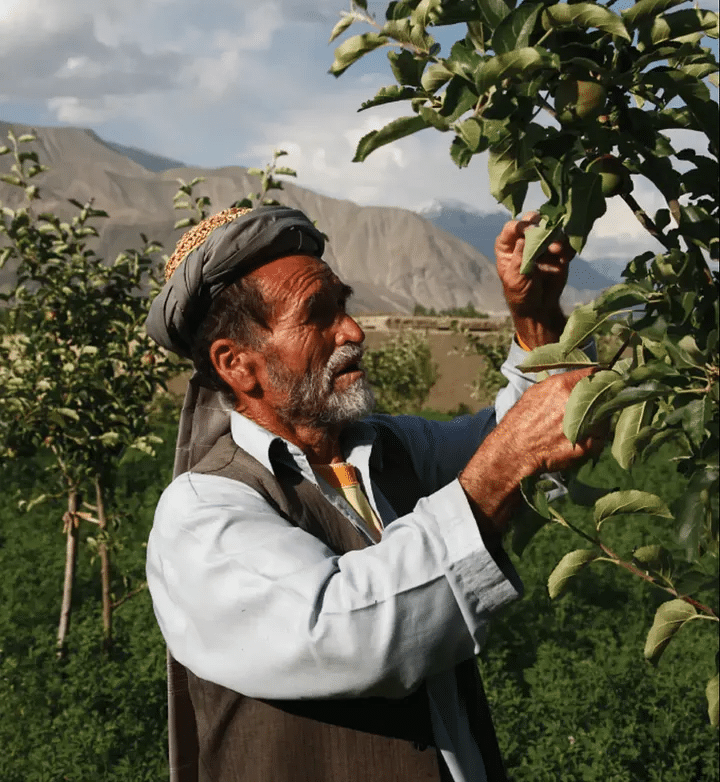
Many values-based banks finance the organic agriculture sector and sustainable farming practices as an alternative to intensive farming and as a way to promote sustainable development for small farmers in developing countries.
LAPO Microfinance Bank Limited, originally established as an NGO over 30 years ago, has evolved into a leading microfinance institution in Nigeria. In line with its commitment to social responsibility and environmental sustainability, LAPO has partnered with the International Institute of Tropical Agriculture (IITA) to implement a tree-planting and agroforestry initiative. This project aims to mitigate the impacts of climate change while creating additional income streams for LAPO’s rural clients. By integrating tree planting into existing agricultural practices, the initiative supports biodiversity, combats environmental degradation and promotes sustainable livelihoods.
NMB Bank’s involvement in a Waste to Energy project in Ghorahi, Dang, plays a significant role in biodiversity and nature conservation. By addressing the issue of growing municipal waste, the project minimises harmful environmental impacts that unmanaged waste can have on ecosystems. Converting waste into biogas and organic fertiliser reduces the pollution caused by traditional waste disposal methods, such as landfills and incineration, which can harm local wildlife habitats. The blended finance structure, which includes a 40% subsidy from the World Bank, made the project viable, demonstrating how sustainable financial models can help protect biodiversity.

Since its origin in 1980, Triodos Bank finances businesses that contribute to a food and agriculture system that works with nature instead of against it. The bank recognises the interconnection between our environment, our health and the food we eat. Through its branches in the Netherlands, Belgium, UK, Spain and Germany, it provides loans to nature-friendly farmers using organic methods and supports conventional farmers who are converting to become organic. This work is extended to Asia, Africa and Latin America through its impact investment funds. Triodos Bank’s focus on nature-based projects and organic farming is grounded in a commitment to ethical land use, ensuring that both ecological restoration and agricultural productivity can coexist in harmony.
Saving what is critical
The connection between biodiversity conservation and the banking sector presents both an urgent challenge and a unique opportunity. As the natural world grapples with unprecedented threats from human activity, banks are in a pivotal position to have a positive influence.
No longer just financial intermediaries, banks must now consider their role as stewards of natural capital.
By integrating nature-related risks and opportunities into their operations, financial institutions can play a crucial role to protect biodiversity while exploring new areas of business.
To seize this opportunity, banks need to embrace a more proactive approach. This involves forming strategic partnerships with governments, NGOs and other stakeholders to overcome existing barriers and create a more favourable environment for nature-positive investments. Innovative financial instruments, such as green bonds and sustainability-linked loans, can help bridge the gap between economic returns and environmental responsibility. By building internal capabilities and raising awareness about the importance of nature-related investments, banks can position themselves as leaders in this emerging field.
Ultimately, the banks that take decisive action to support nature conservation can do well by doing good.