The commitment of values-based banks to affordable housing represents a profound shift in the banking sector, because it places human dignity and environmental sustainability at the forefront of its practice. These institutions are redefining banking with financial tools that create long-term positive impacts on communities and the planet. The collaboration between banks and communities highlights the potential for innovative financial solutions to address deeply rooted social problems.
Shelter is a fundamental and universal necessity. Everyone needs somewhere to live. But an expanding housing crisis in many communities due to generational poverty, lack of availability, rising prices and an explosion in rentals to serve a booming tourist industry, among others, make access to a decent home an arduous journey for many.
The Global Alliance for Banking on Values (GABV) promotes the idea of affordable housing as a source of financial wellness and financial inclusion. Access to decent housing is a human right, and a fundamental aspect of building strong, inclusive communities. Most values-based banks offer financial solutions to access housing or improve the environmental efficiency and living conditions of a home.
GABV members provide excluded individuals with access to housing finance. Some also finance organisations that work to improve housing conditions, reduce poverty, and provide shelter for people facing a crisis.
What do we mean by Affordable Housing?
The concept of affordable housing is understood differently depending on where you are in the world. In Western countries, affordable housing typically focuses on individuals or groups buying or renting homes within a specified income threshold. The US Department of Housing and Development defines “Affordable Housing” as: housing on which the occupant is paying no more than 30 percent of gross income for housing costs, including utilities.
According to Canadian GABV member, Kindred Credit Union, safe and affordable housing means:
“Recognising the lack of access and opportunities people have to a range of affordable housing options in our communities. Whether from homelessness, rent increases for those on fixed incomes, or the need for adequate housing for newcomers.”
The emphasis is often on housing that meets modern standards of safety, size, and access to amenities. This is typically in cities where housing costs are often high. For values-based banks this also means helping to ensure that incomes are sufficient to maintain financial health.
Values-based banks work with affordable housing providers, from developers to social organisations or public institutions, for reasons that range from viewing housing as a fundamental right, creating environment friendly and sustainable communities, or protecting disadvantaged communities such as migrants and individuals and families living on low incomes.
Kindred has partnered with Waterloo Region Community Foundation to address the housing crisis in that region by offering long-term affordable housing through projects for purchase or rent, benefiting those in need.
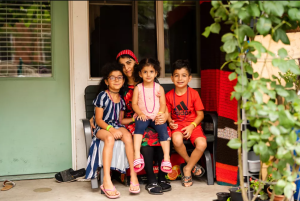
Beneficial State Bank in the USA views affordable housing as a core aspect of its lending mission, fostering innovative partnerships and solutions to address the housing crisis. One example is its collaboration with the social organisation Housing Hope, which provides long-term housing solutions for low-income and homeless families, helping them regain stability while keeping families together. The bank has lent hundreds of millions of dollars to affordable housing developers in California, Oregon, and Washington—three of the top seven U.S. states with the highest levels of unhoused individuals—supporting the creation of over 8,400 housing units.
Same problem, different solutions
Jessie and George, artists based in London, faced significant challenges finding affordable housing within the city’s inflated property market, ultimately limiting their options to the outskirts. Determined to stay close to their community in central London, they discovered the London Community Land Trust (CLT) St. Clements project. This innovative initiative transformed a former Victorian workhouse and mental health hospital into affordable homes for local residents, ensuring that 23 homes were sold at prices pegged to local incomes rather than market values, guaranteeing long-term affordability.
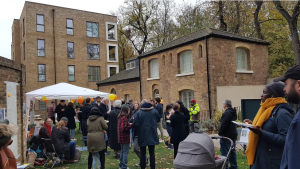
With the support of the UK’s Ecology Building Society, the only lender at the time willing to back this pioneering housing scheme, Jessie and George secured a mortgage tailored to the unique requirements of the St. Clements development. In their efforts to support sustainable communities, Ecology Building Society offers residential mortgages for eco-friendly housing, renovations, and refurbishment, and provides financial rewards to those improving the energy efficiency of their homes.
In Germany, Umweltbank has financed the “City quartier Güterbahnhof” in the city of Tübingen. 93 out of the 157 flats are categorised as social housing. They are rent-controlled for 25 years, are priced one-third below the rent index and are only available to tenants with a housing entitlement certificate. One-third of the subsidised flats are occupied by unemployed people, another by single parents with children, and the last third by student families. The flats meet both the social and ecological requirements of UmweltProjekt AG, which requires all flats to use only 40 per cent of the energy of a comparable existing building.
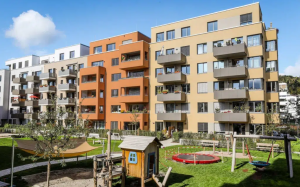
Cohousing is gaining popularity in Belgium because it makes housing more affordable. But the social aspect is also an important incentive. They promote a sense of belonging to a community and therefore combat isolation. vdk bank launched a mortgage loan to help families and single people to be able to afford housing.
Better housing for better lives
In contrast, in the Global South, affordable housing extends beyond financial affordability to address fundamental issues of living conditions and infrastructure. It often involves providing access to essential services like clean drinking water, sanitation, and secure, lasting housing structures. The focus is on improving basic quality of life, especially in informal settlements or rural areas.
In these places microfinance and community-driven construction projects are commonly used to empower individuals to improve their housing conditions sustainably by employing eco-friendly materials and energy efficient alternatives.
LAPO Microfinance Bank Limited, in Nigeria, exemplifies the transformative impact of values-based banking by focusing on improving the lives of low-income households through access to sustainable financial services. In 2012, LAPO partnered with Lafarge, a cement company, to empower clients to build sustainable, environmentally-friendly homes and create access to electricity. This collaboration provided clients with free technical, structural, and architectural advice, setting a new standard for accessing housing loans. LAPO also partnered with solar companies to offer clients affordable and flexible options to buy solar panels. To date, the bank has served over 27,000 clients with affordable housing solutions.
Banco Popular de Honduras provides microloans to small-scale entrepreneurs to improve the hygiene and safety conditions of their families through home and business construction or improvement projects. The sanitation and water green loan is crucial to reduce solid waste and ensure proper sewage treatment in homes, for Honduran families, many of whom still rely on septic tanks and latrines. This increases the risk of contaminating farmland, as well as polluting nearby rivers and lagoons. Access to this loan helps these microentrepreneurs to improve their living and working conditions, and offers a pathway out of poverty.
Facing homelessness
The definition of being “homeless” varies between countries, making it extremely difficult to measure globally. Nevertheless a worldwide attempt was made in 2005 when the United Nations estimated there were 100 million homeless people. When, in 2024, Global Homelessness Statistics expanded the homeless definition to include people living in inadequate housing, such as slums and structures not intended for housing, it found there were 1.6 billion people who did not have adequate housing.
Communities that are considered at risk or at a disadvantage, such as minorities and migrants, are most likely to become homeless and have least access to secure housing. Operating in the south of the United States of America, GABV member Southern Bancorp, decided to build an expanded mortgage division to address the gap between homeownership among Black and Hispanic communities and white homeowners. In its long-term vision, the bank aims to not just eradicate this gap, but also to create a new generation of potential homeowners and break cycles of poverty within minority and marginalised communities throughout the South.
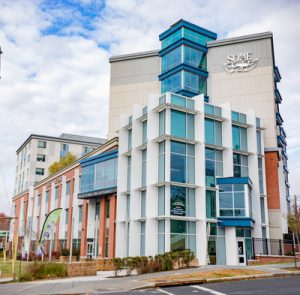
Similar story is repeated in the Marshall Heights, in Washington, a historically African American neighbourhood that began as an informal settlement because it was one of the few places in the city where Black people were allowed to own property. Many of the original residents were poor African Americans who moved from the southern United States, seeking better opportunities. Despite being part of the nation’s capital, the community was largely neglected by the city government. Over time, local organisations have stepped in to help support the community like SOME (So Others Might Eat). With a USD 10 million investment from City First Bank, the largest black-led bank in the country, SOME developed the Conway Centre, a major mixed-use project which includes 202 affordable housing units, healthcare services and job training opportunities.
In the UK, Extern Homes was established by Extern Northern Ireland to address the pressing issue of homelessness and housing instability. The initiative has provided secure, supported accommodation for individuals facing homelessness or those at risk of homelessness. A loan from Charity Bank enabled Extern to purchase ten houses, transforming them into safe havens where people can rebuild their lives.
Charity Bank also financed Target Housing, an organisation that offers housing solutions for individuals with complex needs, such as substance abuse, alcohol dependency, mental health challenges, and learning disabilities. Their latest initiative, THRIVE, is dedicated to providing permanent housing and support to some of the most challenging homeless cases—people whose lives have been profoundly affected by trauma, adversity, and instability, and who have often been rejected by other services.
Catalyst for comprehensive social change
Addressing the complex challenge of homelessness and inadequate housing requires a concerted global effort. As the world grapples with the ongoing housing crisis, the work of the GABV members offers a reason for genuine hope. Their efforts to finance affordable housing projects, support sustainable communities, and help disadvantaged people enjoy the dignity of a secure and comfortable home, demonstrate that banking can be a powerful tool for positive social change.
By continuing to prioritise housing as a fundamental right and leveraging innovative financial solutions, these institutions are paving the way for a more inclusive and equitable future.